

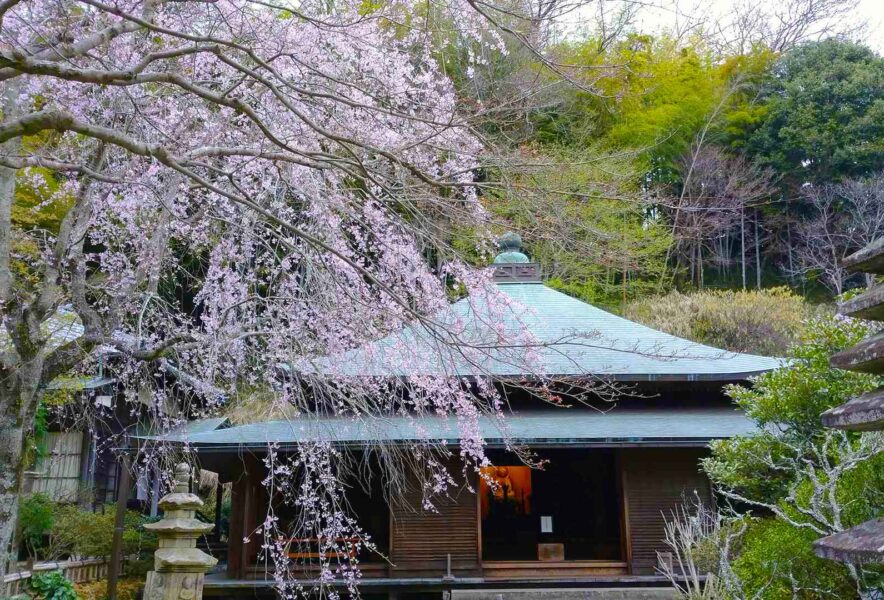
Kamakura, once the political center of medieval Japan, is known for its many historic temples and beautiful natural surroundings. Just one hour from Tokyo, it makes a perfect day trip for those looking to experience traditional Japanese culture at a relaxed pace.
This walking route begins at Kita-Kamakura Station and takes you to three charming temples: Engakuji, Koshoji, and Tokeiji. Surrounded by seasonal greenery and quiet residential streets, this course offers a peaceful escape from the crowds while allowing you to discover Kamakura’s rich history.
- Today’s Walking Route
- Kamakura Walking Course from Kita-Kamakura Station
- A. Retro-style Station Building – Kita-Kamakura Station
- B. Engaku-ji – A Grand Zen Temple Surrounded by Lush Greenery
- C. Kosho-ji – A Small Temple with a Hidden Christian History
- D. Tokei-ji – A Temple of Resilience and Renewal
- E. Café Yoshino – A Cozy Hideaway for Coffee and Pound Cake
- F. Return to Kita-Kamakura Station
- Kamakura Walk A perfect in Kita-Kamakura
- Kamakura Walking : Recommended Articles
Today’s Walking Route
A. Kita-Kamakura Station
A charming retro-style station building
B. Engaku-ji
A grand Zen temple with vast green grounds and the National Treasure Shariden Hall
C. Kosho-ji
A temple known for protecting hidden Christians during Japan’s period of persecution
D. Tokei-ji
A tranquil temple where nature is preserved in its purest form
E. Kissayoshino Café
A cozy hidden café — perfect for a break with delicious pound cake
F. Return to Kita-Kamakura Station
Kamakura Walking Course from Kita-Kamakura Station
A. Retro-style Station Building – Kita-Kamakura Station
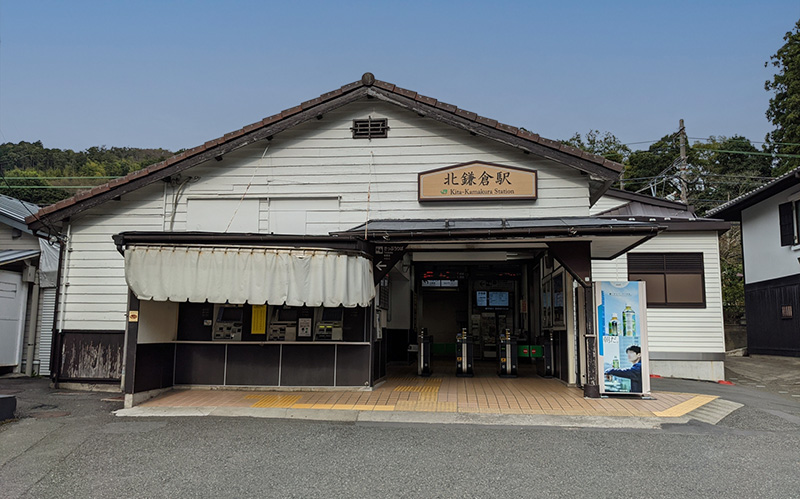
Kita-Kamakura Station still retains its original wooden station building, constructed in 1929. The single-story structure preserves the nostalgic atmosphere of early 20th-century Japan and has been selected as one of the “Top 100 Stations in the Kanto Region.”
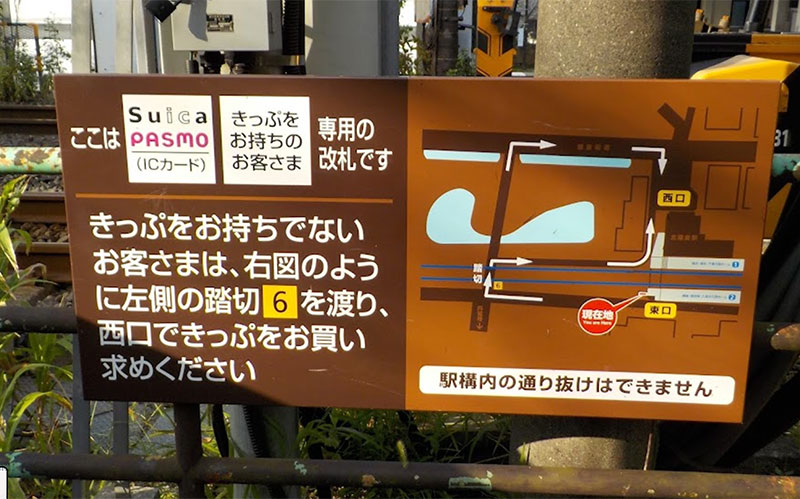
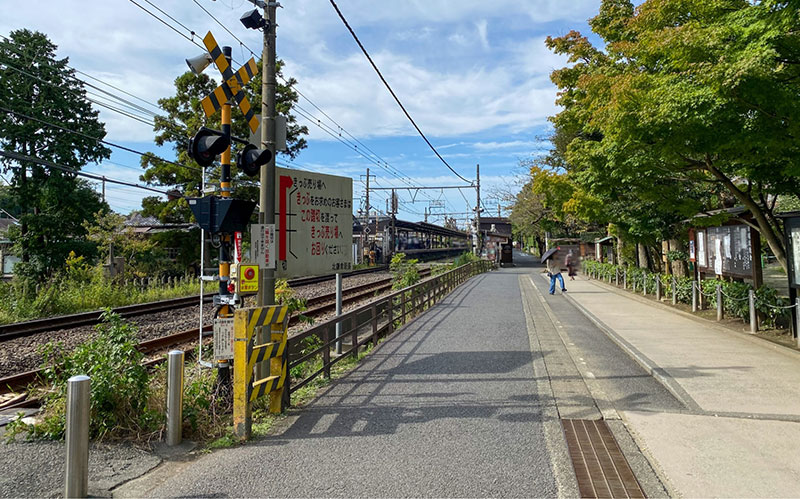
Interestingly, the JR Yokosuka Line was built through what was once the grounds of Engaku-ji, which is why the inbound and outbound platforms are connected by a railroad crossing rather than an overpass or underground passage.
Beside the small East Exit gate stands a cherry blossom tree. In spring, it blooms beautifully, adding a soft touch of color to the historic station building.
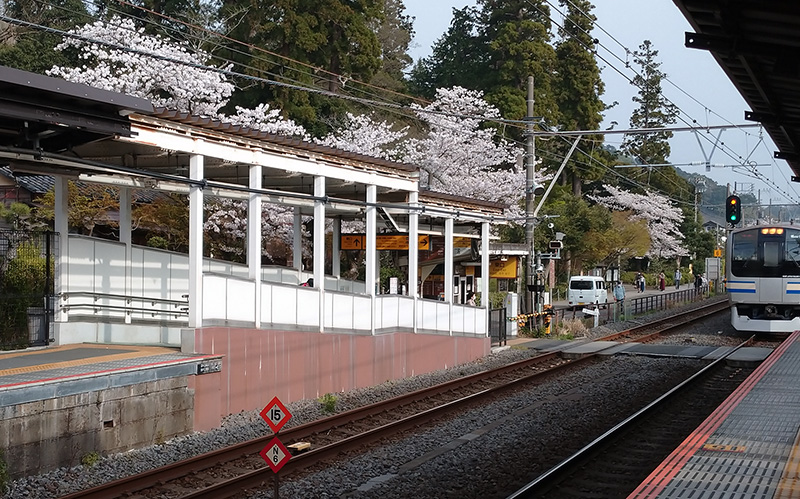
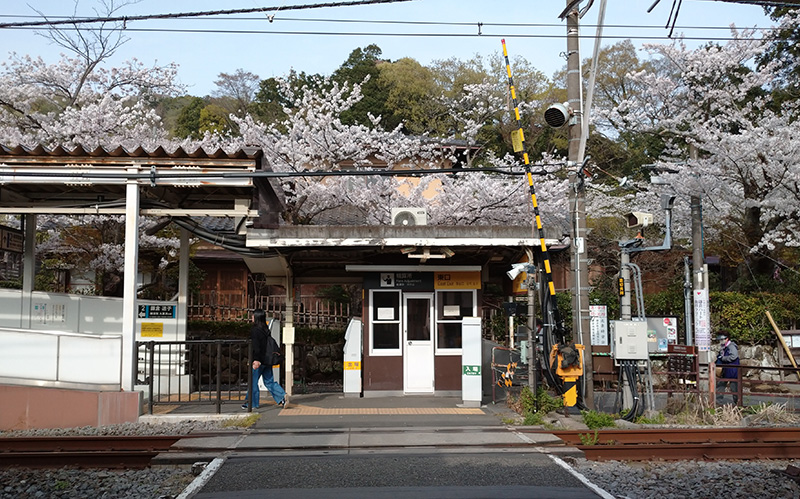
If you have an IC card, you can exit directly from the inbound platform through the small East Exit without crossing the tracks. Since our first destination is Engaku-ji Temple, let’s tap out at the East Exit and begin our walk.
B. Engaku-ji – A Grand Zen Temple Surrounded by Lush Greenery
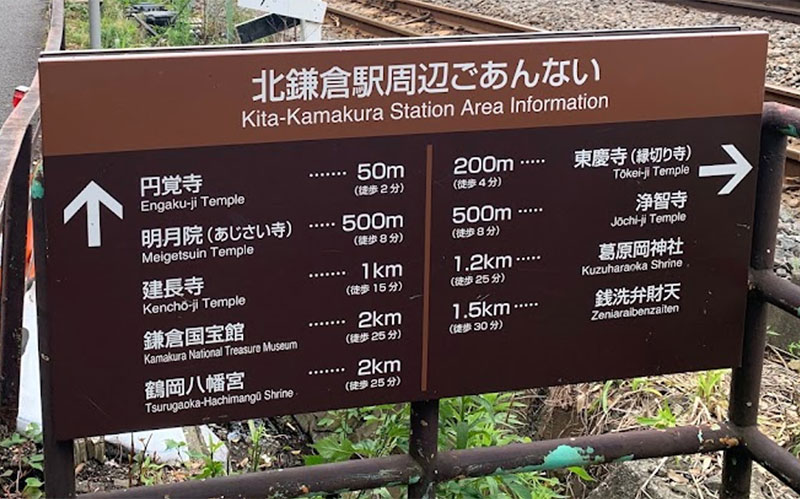
Just steps from Kita-Kamakura Station, you will find the entrance to Engaku-ji Temple. Climb the stone steps and pass through the main gate to begin your visit.
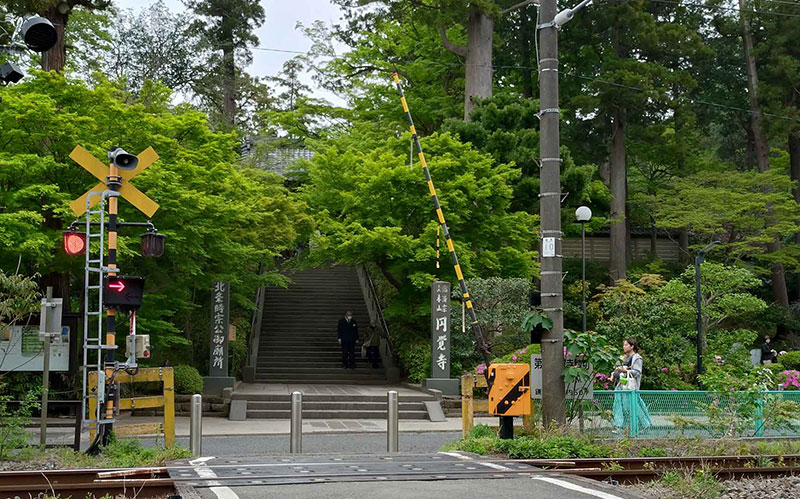
The temple grounds stretch across the natural slopes of the surrounding hills, making use of the mountain’s elevation. As you explore, you’ll find yourself walking gently uphill along quiet paths lined with trees.
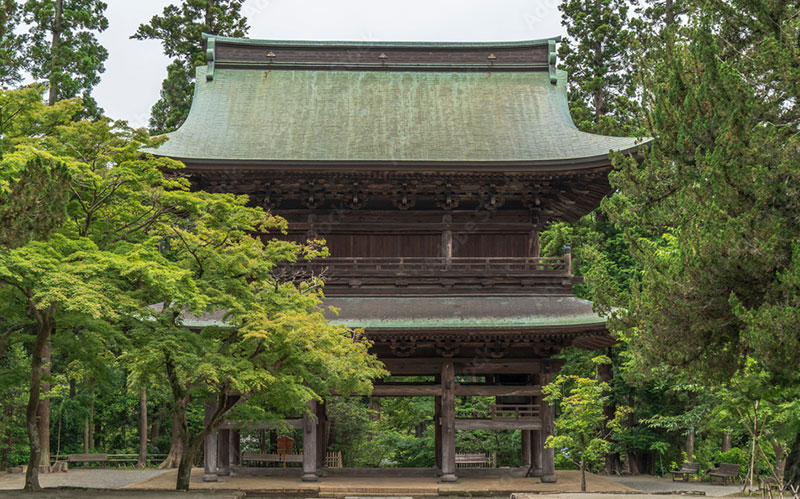
Engaku-ji is one of Kamakura’s largest and most important Zen temples, and its vast grounds are home to many historic buildings, including the Shariden Hall, a designated National Treasure. With so much to see, it’s best to allow plenty of time to fully appreciate the peaceful atmosphere.
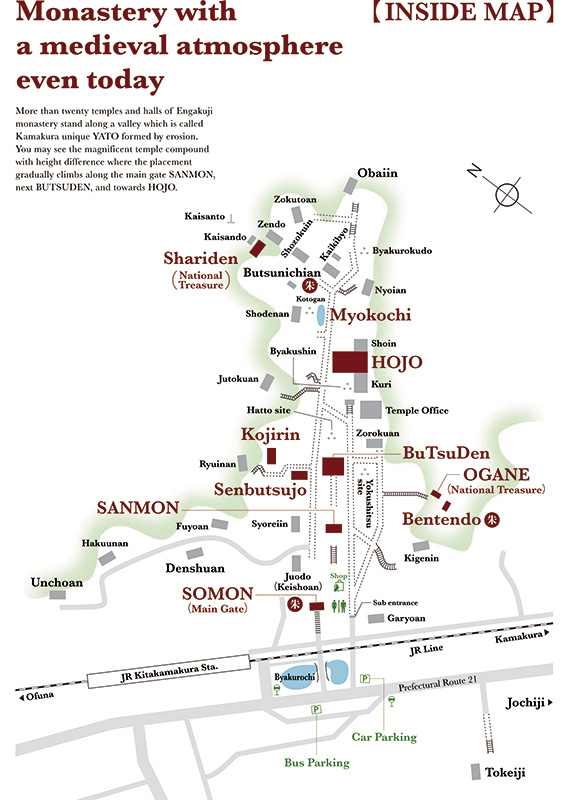
Photo courtesy of Engaku-ji Temple (from the Official website) here
Highlights of Engaku-ji
Sanmon (Main Gate)
Rebuilt in 1785, the impressive Sanmon gate is designated as an Important Cultural Property of Kanagawa Prefecture and is often considered the most beautiful temple gate among Kamakura’s Five Great Zen Temples.
Although the interior is usually closed to the public, it enshrines statues of the Eleven-Headed Kannon, the Twelve Heavenly Generals, and the Sixteen Arhats.
Butsuden (Buddha Hall)
The Butsuden houses a statue of Shaka Nyorai (the historical Buddha), crowned with an ornate headpiece — a rare and distinctive form.
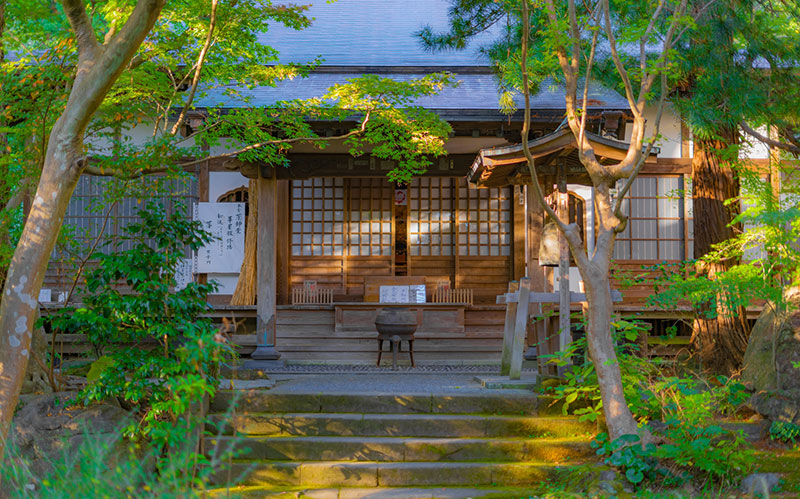
Hojo (Former Abbot’s Quarters)
Originally the residence of the head priest, the Hojo is now used for various events. Around November 3 (Culture Day), treasured paintings and calligraphy preserved by the temple are displayed to the public during a special annual exhibition known as Hōmotsu Fūire.
Shariden (National Treasure)
The Shariden Hall, normally closed to visitors, is opened to the public during the same exhibition period. This elegant structure represents a classic architectural style introduced from China during the Kamakura period and is regarded as one of the finest examples of Zen temple architecture in Japan.
Ogane (Great Temple Bell) & Bentendo
To reach the National Treasure temple bell — the largest in the Kanto region — and Bentendo Hall, visitors must climb a long flight of stairs.
After exploring the vast temple grounds, the climb may feel challenging, but the reward is worth it. From the top, you can enjoy sweeping views of the surrounding hills of Kita-Kamakura. On clear days, Mount Fuji can even be seen in the distance.
Nearby, a small teahouse called Benten Chaya offers simple lunch sets, making it a pleasant spot for a break.
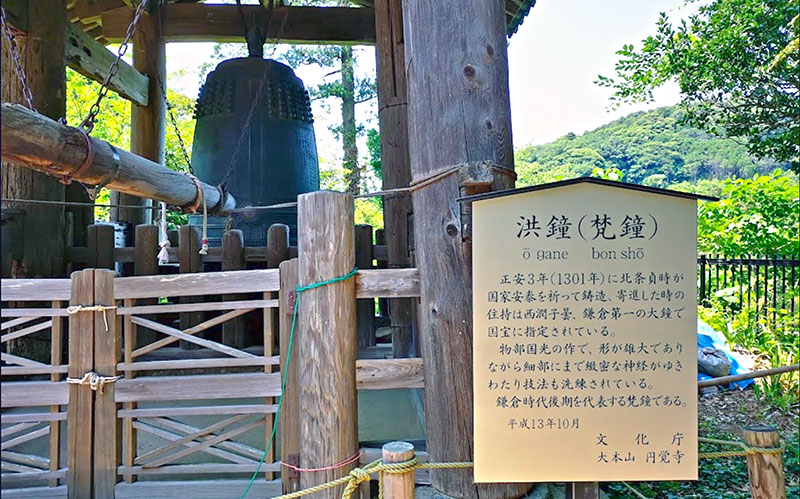
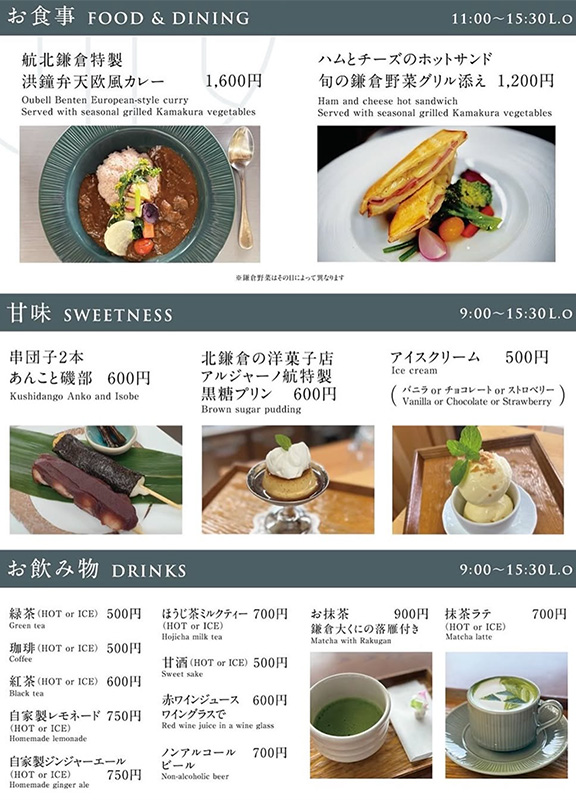
Photo courtesy of official website here
Cultural Experiences
Engaku-ji regularly holds meditation (zazen) and sutra-copying (shakyo) sessions, and reservations are not required.
Shakyo, the practice of copying Buddhist scriptures by hand, is a traditional form of meditation that promotes calmness and concentration. All necessary materials are provided, so visitors are welcome to join even without prior experience.
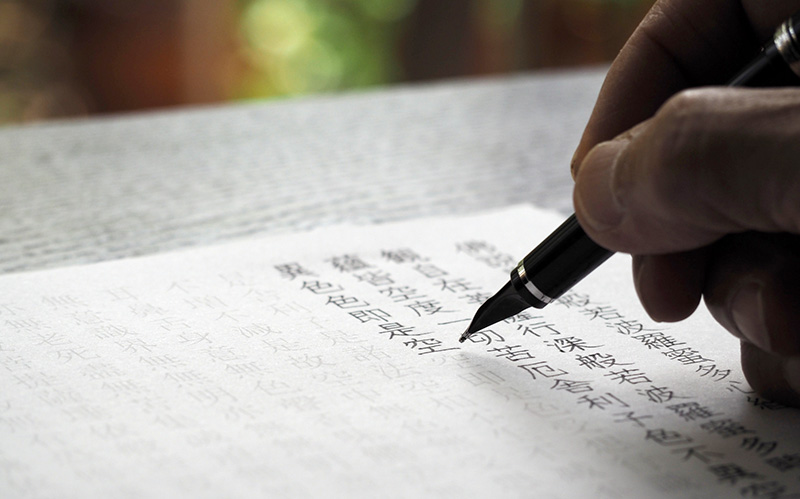
For schedules, participation details, and updates, please visit the official Engaku-ji website (English page available).
Engaku-ji Temple
409 Yamanouchi, Kamakura, Kanagawa 247-0062
Official website:Click here
C. Kosho-ji – A Small Temple with a Hidden Christian History
After leaving Engaku-ji, walk back toward Kita-Kamakura Station and continue along the Kamakura Kaido Road in the direction of Ofuna. When you see Kosaka Post Office on your right, turn left. A short walk ahead will lead you to Kosho-ji
Though modest in size, Kosho-ji holds a remarkable history. During the Edo period, when Christianity was strictly prohibited by the shogunate, the temple is said to have protected many hidden Christians by registering them as parishioners.
In a time of fear and religious persecution, Kosho-ji quietly became a place of refuge.
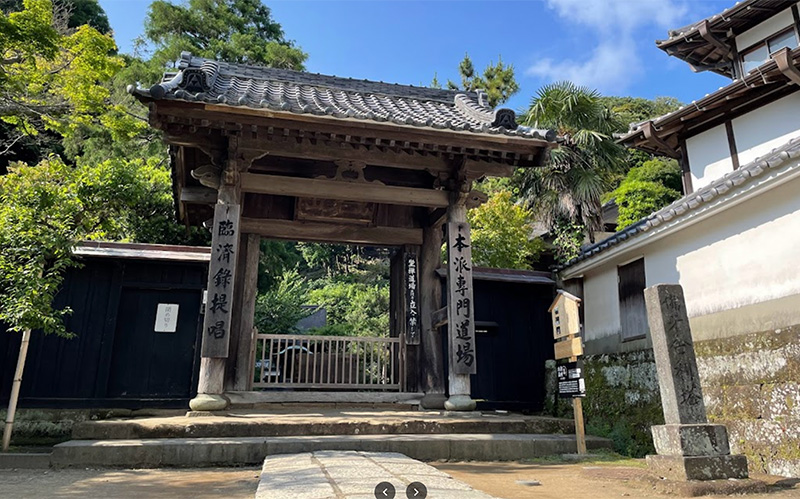
Take a close look at the temple gate. Carved into its crest is a cross enclosed within a circle — a rare and striking symbol. Because of this design, the gate is sometimes referred to as the “Cross Gate.”
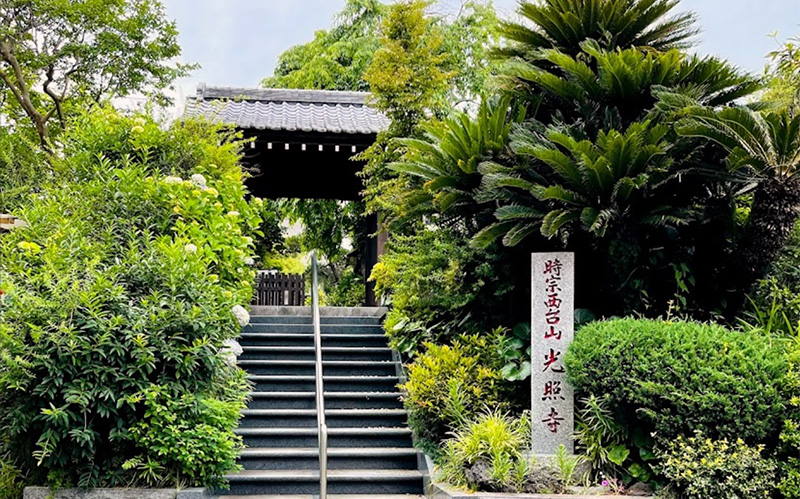
Inside the temple grounds, you can also find artifacts once used by hidden Christians, including candlesticks. These quiet remnants tell the story of how Kosho-ji offered protection to those persecuted by authority.
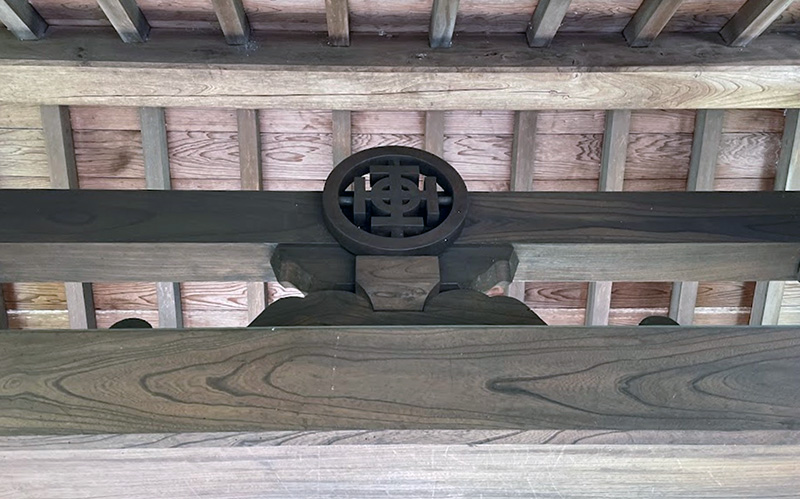
There is no admission fee to enter the temple grounds, but visitors are encouraged to offer a small donation when paying their respects.
Kosho-ji Temple
827 Yamanouchi, Kamakura, Kanagawa 247-0062
Official website:Click here
D. Tokei-ji – A Temple of Resilience and Renewal
From Kosho-ji, return to the Kamakura Kaido Road and walk back toward Kita-Kamakura Station. Just past the station on your left, you will see a sign pointing to Tokei-ji on the right.
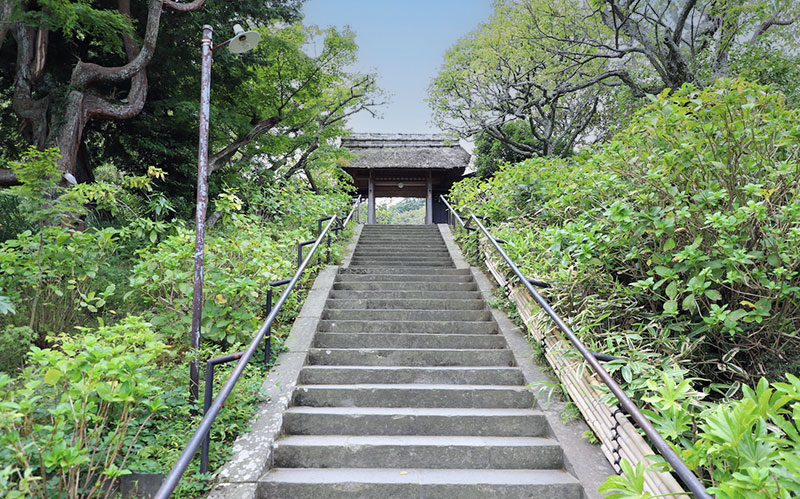
Founded in 1285 by Kakusan-ni, the wife of Hojo Tokimune, Tokei-ji is a Rinzai Zen temple with a unique place in Japanese history. For nearly 600 years, during a time when women were not legally allowed to initiate divorce, the temple served as a refuge. Women who sought sanctuary here could ultimately secure separation from their husbands, earning Tokei-ji the nickname “the Divorce Temple.”
Today, Tokei-ji is also known as a “Temple of Flowers,” celebrated for its plum blossoms, hydrangeas, cherry trees, and seasonal wildflowers. However, since 2020, the temple has been undergoing a project called “Revitalizing the Earth.”
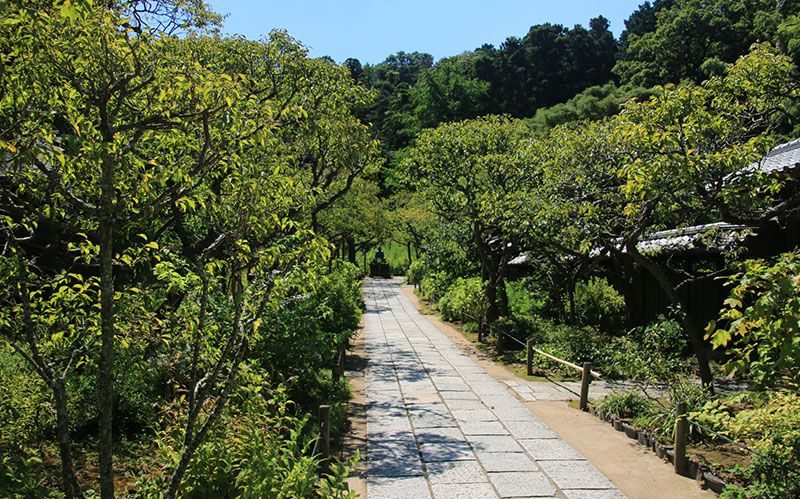
In response to repeated typhoons and heavy rains that weakened the land and caused fallen trees and erosion, the head priest made a bold decision. Rather than maintaining the grounds purely for visual beauty, the temple has begun restoring the land to a more natural state.
As a result, the garden may sometimes appear less manicured than visitors expect. But this is part of a long-term effort to allow plants to take root naturally, improve airflow through the grounds, and preserve Tokei-ji for the next hundred years.
There is currently no admission fee, and photography within the temple grounds is prohibited. Please visit the main hall quietly and offer a small donation when paying your respects.
Take a moment to observe the ever-changing landscape of Tokei-ji in silence.
Tokei-ji Temple
1367 Yamanouchi, Kamakura, Kanagawa 247-0062
Official website:Click here
E. Café Yoshino – A Cozy Hideaway for Coffee and Pound Cake
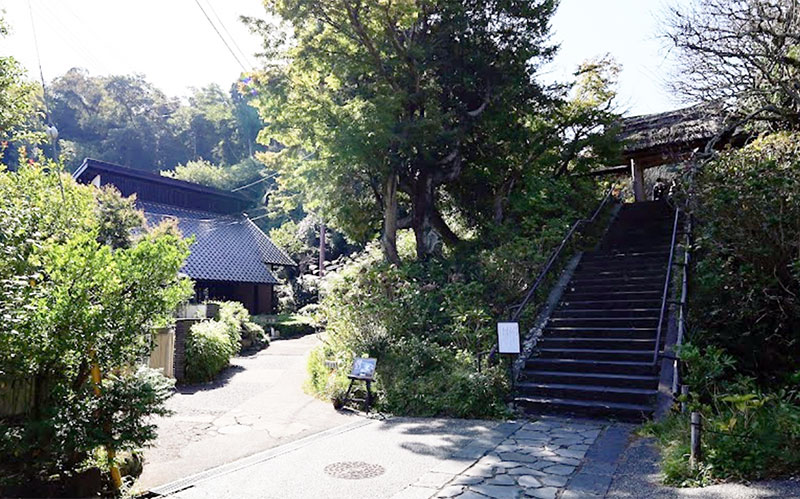
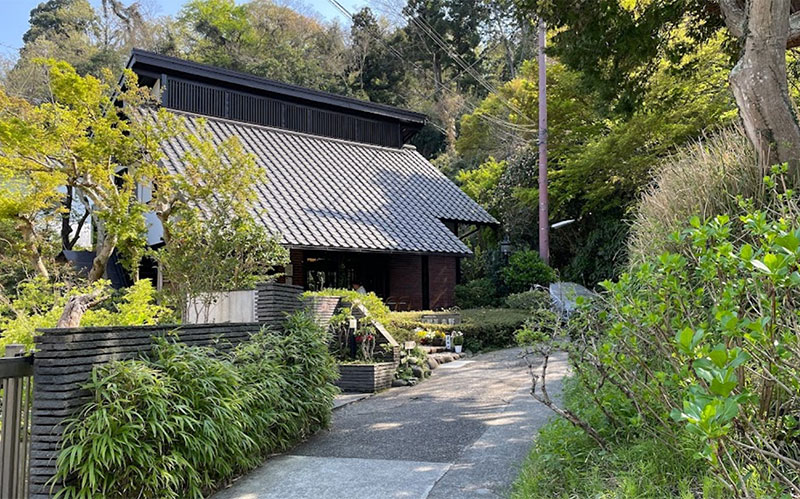
Just at the foot of Tokei-ji’s stone steps stands a charming house with a distinctive gray-tiled roof — Kissayoshino.
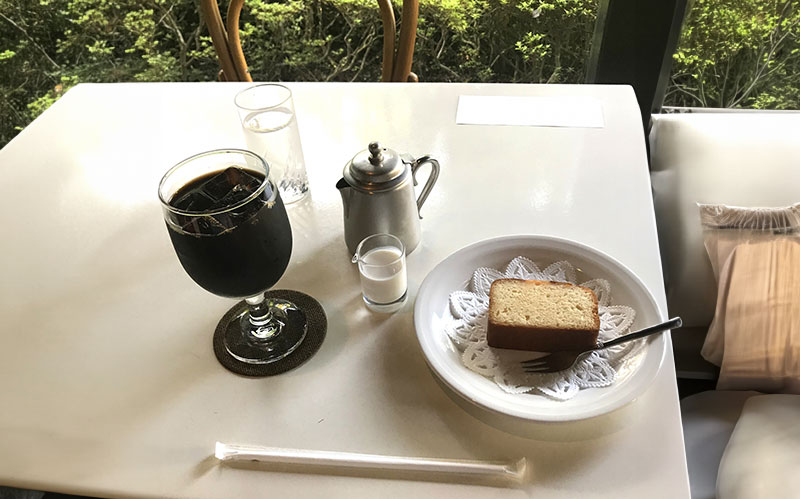
This small café has a nostalgic Showa-era atmosphere. The menu features coffee, tea, pound cake, fruit cake, and homemade cookies. One of its highlights is the siphon-brewed coffee, prepared in the same style since the café first opened in 1980.
Soft lighting fills the space, creating a calm and relaxing setting — the perfect place to rest after exploring the temples of Kita-Kamakura. Time seems to move a little more slowly here.
CAFE Yoshino
1379 Yamanouchi, Kamakura, Kanagawa 247-0062
F. Return to Kita-Kamakura Station
From Tokei-ji, make your way back to Kita-Kamakura Station to conclude today’s walk.
After strolling through the temple grounds, you may find your mind feeling a little calmer — perhaps even refreshed with new perspectives. The quiet atmosphere of Kita-Kamakura has a way of gently slowing you down.
There are many other temples in the area worth exploring, so you may wish to return another day for a different walking route.
Next to the station, you will find a branch of Toshimaya, famous for Kamakura’s beloved dove-shaped cookie, Hato Sabure. It makes a perfect souvenir — or a sweet treat for the journey home.
Kamakura Walk A perfect in Kita-Kamakura
A. (Start)Kita-Kamakura station
↓ 50m
B. Engaku-ji Temple
↓ 600m
C. Kosho-ji Temple
↓ 700m
D. Tokei-ji Temple
↓ 46m
E. Cafe Yoshino
↓ 230m
F. (Goal)Kita-Kamakura station
合計1.7km
The distances indicate the walk to each temple entrance and do not include time spend exploring the temple grounds.